Airjet and Waterjet Loom Machines in Surat: Manufacturer, Supplier & Complete Buying Guide
Compare Airjet and Waterjet Loom Machines in Surat, including prices, manufacturers, suppliers, features, selection tips,...

Find reliable Textile Machinery Suppliers in India with this complete buying guide covering machine types, prices, selection, suppliers, support, maintenance, and spare parts.
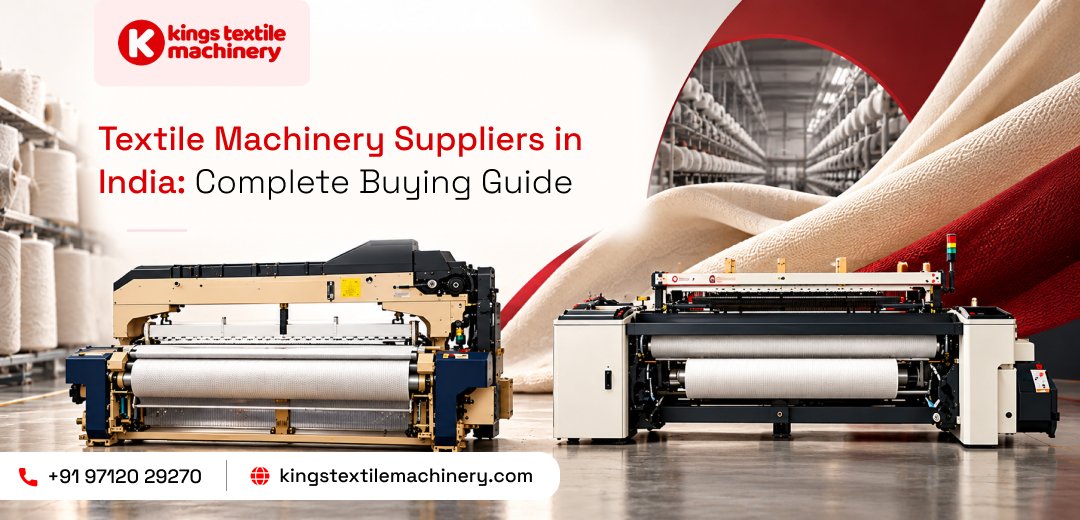
India has one of the world’s largest and most diverse textile industries, with manufacturers producing everything from basic fabrics to specialized and high-performance textiles. As production requirements continue to evolve, choosing the right machinery has become an important decision for textile manufacturers, weaving mills, and fabric producers.
Finding reliable Textile Machinery Suppliers in India is not only about comparing machine prices. Businesses also need to consider machine specifications, production capacity, fabric requirements, installation, technical support, maintenance, spare parts, and long-term service.
This complete buying guide explains what to look for when selecting a Textile Machinery Supplier in India and how to make a better machinery investment decision.
A textile machinery supplier provides machinery and related solutions used in textile manufacturing and weaving operations.
Depending on the supplier, the product range may include:
A good Textile Machinery Supplier should do more than simply sell a machine. The supplier should understand your production requirements and help you evaluate machinery according to your application.
Textile machinery represents a significant investment. The wrong machine or an unsuitable supplier can create challenges related to production, maintenance, technical support, and replacement parts.
A reliable supplier can help you:
This is why businesses should evaluate the complete supplier offering instead of choosing a machine based only on its initial price.
The right machinery depends on your fabric, yarn, production target, and business requirements.
Some commonly considered textile machinery categories include:
Airjet Looms use air to insert the weft yarn during the weaving process. They can be suitable for high-speed weaving applications where the fabric and yarn characteristics are compatible with the technology.
Waterjet Looms use water for weft insertion and can be suitable for specific fabric and yarn applications.
Weaving machinery includes different types of machines designed to manufacture woven fabrics according to specific production requirements.
Before selecting a machine, consider your fabric type, yarn characteristics, required width, production capacity, factory infrastructure, and future expansion plans.
Start by evaluating the quality and specifications of the machinery. Look at machine construction, configuration, production capability, operating requirements, and suitability for your application.
Don’t compare machines based only on one specification such as speed. Consider working width, production capacity, fabric application, yarn compatibility, automation features, utilities, and other relevant specifications.
Your machinery should match your production goals. A machine suitable for a small weaving unit may not be the right choice for a large textile manufacturing facility.
Clearly define your expected production volume before selecting machinery.
Consider how long the supplier has been working with textile machinery and whether they understand the requirements of textile manufacturers and weaving mills.
Experience can be particularly valuable when you need help selecting machinery for a new factory or production expansion.
Machinery installation is an important stage after purchase. Ask the supplier what installation and setup support is available and what is included in the project.
Technical issues can affect production. Before purchasing machinery, understand what type of technical support is available and how you can contact the supplier when you need assistance.
Ask about maintenance requirements, preventive maintenance recommendations, and available support.
A supplier that can discuss maintenance requirements can be more valuable over the long term.
Spare parts are an important consideration when purchasing textile machinery.
Before making a purchase, ask about:
Easy access to suitable components can help businesses manage maintenance requirements more effectively.
The purchase price is only one part of the machinery investment.
Consider the overall cost, including:
A machine with a lower initial price may not always be the most economical choice in the long term.
A strong supplier relationship should continue after the machinery is purchased.
Ask about technical assistance, maintenance support, spare parts, commissioning, and other services relevant to your machinery.
Starting a new textile factory requires careful machinery planning.
Before purchasing equipment, define:
A Textile Machinery Supplier in India with experience in machinery consultation can help you evaluate these factors before making a major investment.
Existing textile manufacturers may need additional machinery when increasing production capacity.
Instead of simply purchasing additional machines, businesses should consider whether the new equipment is compatible with their existing production setup.
Important considerations include:
The right supplier can help you evaluate these requirements before expanding your machinery setup.
Airjet and Waterjet Looms have different operating principles and may be suitable for different applications.
When comparing the two, consider:
| Factor | Airjet Loom | Waterjet Loom |
| Weft insertion | Air | Water |
| Suitable application | Depends on fabric and yarn | Depends on fabric and yarn |
| Utility requirements | Compressed air | Water-related infrastructure |
| Production focus | Suitable high-speed applications | Suitable high-speed applications |
| Selection | Based on production needs | Based on production needs |
There is no single loom that is best for every textile manufacturer.
Your fabric, yarn, production requirements, infrastructure, and investment objectives should determine the choice.
Kings Textile Machinery is a Textile Machinery Manufacturer and Supplier in India, supporting businesses looking for reliable textile weaving machinery and related solutions.
With 12+ years of experience and 200+ clients, Kings Textile Machinery works with textile manufacturers, weaving mills, fabric producers, new factories, and businesses expanding their production.
Our solutions include:
Our focus is to understand the machinery requirement first and then discuss a suitable solution based on the business’s production needs.
Before finalizing a supplier, create a checklist covering:
Machine: Does it meet your production requirements?
Price: Does the overall investment fit your budget?
Quality: Is the machine suitable for your application?
Support: Is technical assistance available?
Installation: What installation and commissioning support is offered?
Maintenance: How will ongoing maintenance be handled?
Spare Parts: Can required components be sourced when needed?
Experience: Does the supplier understand your industry and application?
Future: Can the supplier support your production expansion?
Comparing suppliers using these criteria can help you make a more informed decision.
Choosing among Textile Machinery Suppliers in India requires more than comparing machine prices. The right supplier should understand your production requirements and provide appropriate machinery along with relevant technical, installation, maintenance, and spare-parts support.
Whether you are setting up a new textile factory, expanding an existing weaving mill, or replacing older machinery, take time to evaluate the machine, supplier, total investment, and long-term support.
Kings Textile Machinery can help you discuss your Airjet Loom, Waterjet Loom, and textile machinery requirements and identify the next step for your production project.
Looking for a reliable Textile Machinery Supplier in India? Contact Kings Textile Machinery for your machinery requirement and quotation.
Look beyond the machine price when choosing a supplier. Consider machinery quality, specifications, production suitability, supplier experience, installation support, technical assistance, maintenance, spare-parts availability, and after-sales service. You should also check whether the supplier understands your specific fabric, yarn, and production requirements. A supplier that can support your business throughout the machinery lifecycle can provide more value than a supplier focused only on the initial sale.
India has suppliers offering many types of textile machinery for spinning, weaving, processing, finishing, and other textile manufacturing applications. For weaving businesses, commonly considered machinery includes Airjet Looms, Waterjet Looms, rapier looms, and other weaving machines. The appropriate machinery depends on your fabric, yarn, production volume, required width, factory setup, and budget. Always evaluate the machine according to your actual production application rather than selecting equipment based only on popularity or price.
Ask about machine specifications, production capacity, suitable fabric applications, installation, commissioning, technical support, maintenance, spare parts, warranty or applicable support terms, delivery timelines, and total investment. You should also ask whether the supplier can help you select the appropriate machine for your production requirement. Providing your fabric type, yarn details, required width, and production target can help the supplier recommend a more relevant solution.
Neither Airjet Looms nor Waterjet Looms are universally better. Their suitability depends on the fabric, yarn, production application, machine configuration, factory infrastructure, and business requirements. Airjet Looms use air for weft insertion, while Waterjet Looms use water. Each technology has different operating considerations. The best choice should therefore be based on your specific production requirements rather than a general comparison. A qualified textile machinery supplier can help you evaluate both options before making an investment.
Textile machinery prices in India vary significantly depending on the machine type, model, specifications, production capacity, automation, configuration, manufacturer, and other project requirements. Installation, utilities, maintenance, spare parts, and technical support can also affect the overall investment. Instead of relying on a generic online price, businesses should provide their specific machinery requirements and request a quotation. This allows the supplier to provide information that is more relevant to the actual machine and production application.
Many professional textile machinery suppliers provide or coordinate installation, commissioning, technical assistance, maintenance, and other support services, although the exact scope varies by supplier and project. Before purchasing, ask what support is included and what services are available separately. Installation and commissioning should follow the applicable machine documentation and safety requirements. Technical support can also be valuable when production teams encounter operational or performance-related concerns after the machine is installed.
Spare parts are important because machinery components can require replacement due to normal wear, maintenance, servicing, or unexpected issues. Before purchasing a machine, ask the supplier about spare-parts availability, component identification, replacement timelines, and technical support. Easy access to suitable parts can make maintenance planning easier and may help reduce avoidable production interruptions. Always confirm that replacement components are compatible with the specific machine model and follow applicable manufacturer recommendations.
Yes, an experienced supplier can discuss machinery requirements for a new textile factory based on the planned fabric production, yarn, capacity, machine configuration, factory space, utilities, and future expansion. However, the exact scope of support varies between suppliers. For a new factory, it is useful to discuss machinery selection before finalizing the equipment because changing machinery decisions later can be costly. Start by defining your production goals and then work with the supplier to evaluate suitable machinery options.
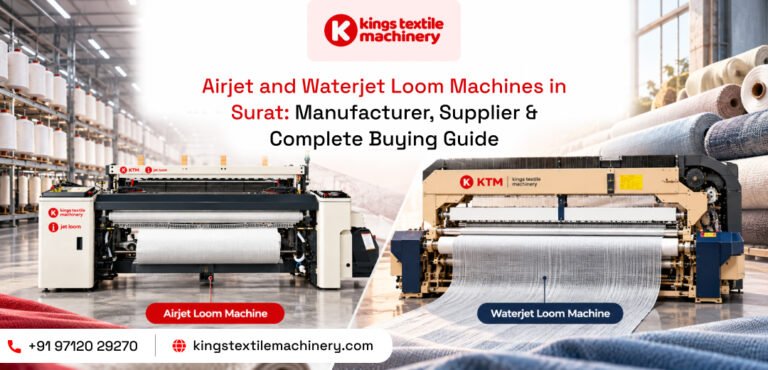 Oct 08, 2026
Compare Airjet and Waterjet Loom Machines in Surat, including prices, manufacturers, suppliers, features, selection tips,...
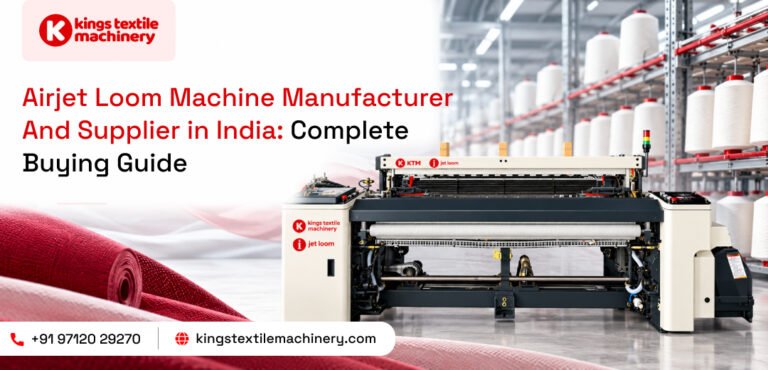 Jul 17, 2026
Learn how to choose an Airjet Loom Machine Manufacturer And Supplier in India, including machine...
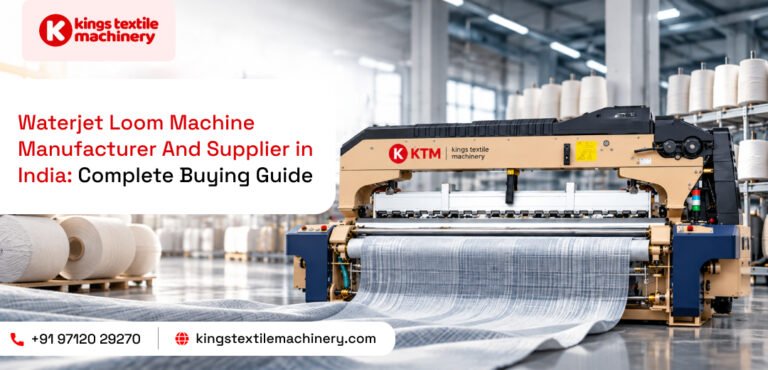 Jul 17, 2026
Learn how to choose a Waterjet Loom Machine Manufacturer And Supplier in India, including machine...
 Jul 17, 2026
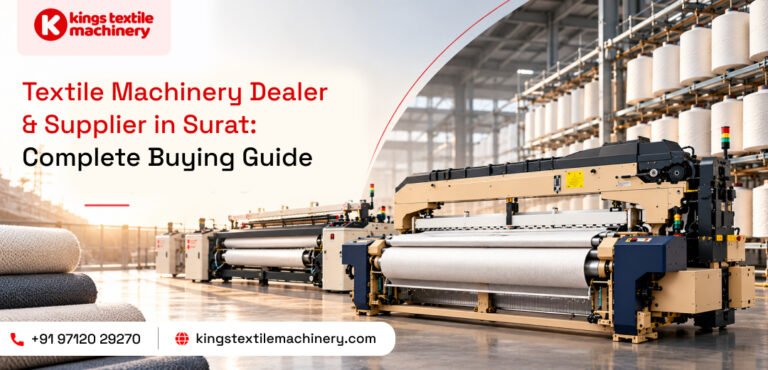
Find the right Textile Machinery Dealer And Supplier in Surat with this complete buying guide...